
Rechargeable stun guns have moved from a niche novelty to a mainstream choice for personal protection, largely because they remove the recurring cost and hassle of buying disposable batteries. These devices integrate a rechargeable power source directly into the handle, meaning the unit is always ready for use as long as you maintain its charge. This guide provides a definitive breakdown of what rechargeable stun guns are, how their battery technology works, and how to select the best model for your specific needs.
Key Takeaways
- Rechargeable stun guns eliminate the recurring cost and environmental waste of disposable batteries, making them more economical over the device's lifetime.
- The two primary battery technologies used are lithium-ion (Li-ion) and nickel-metal hydride (NiMH), each with distinct performance and lifespan characteristics.
- A fully charged stun gun is a critical safety tool; understanding charge cycles and storage practices prevents being caught with a dead device.
- Legal restrictions on stun guns vary significantly by jurisdiction, and ownership is prohibited in some countries and several U.S. states.
- Proper maintenance, including periodic charging and careful storage, is essential for ensuring the device functions reliably when needed.
The Complete Answer: What Is a Rechargeable Stun Gun and How Does It Differ from Battery-Powered Models?
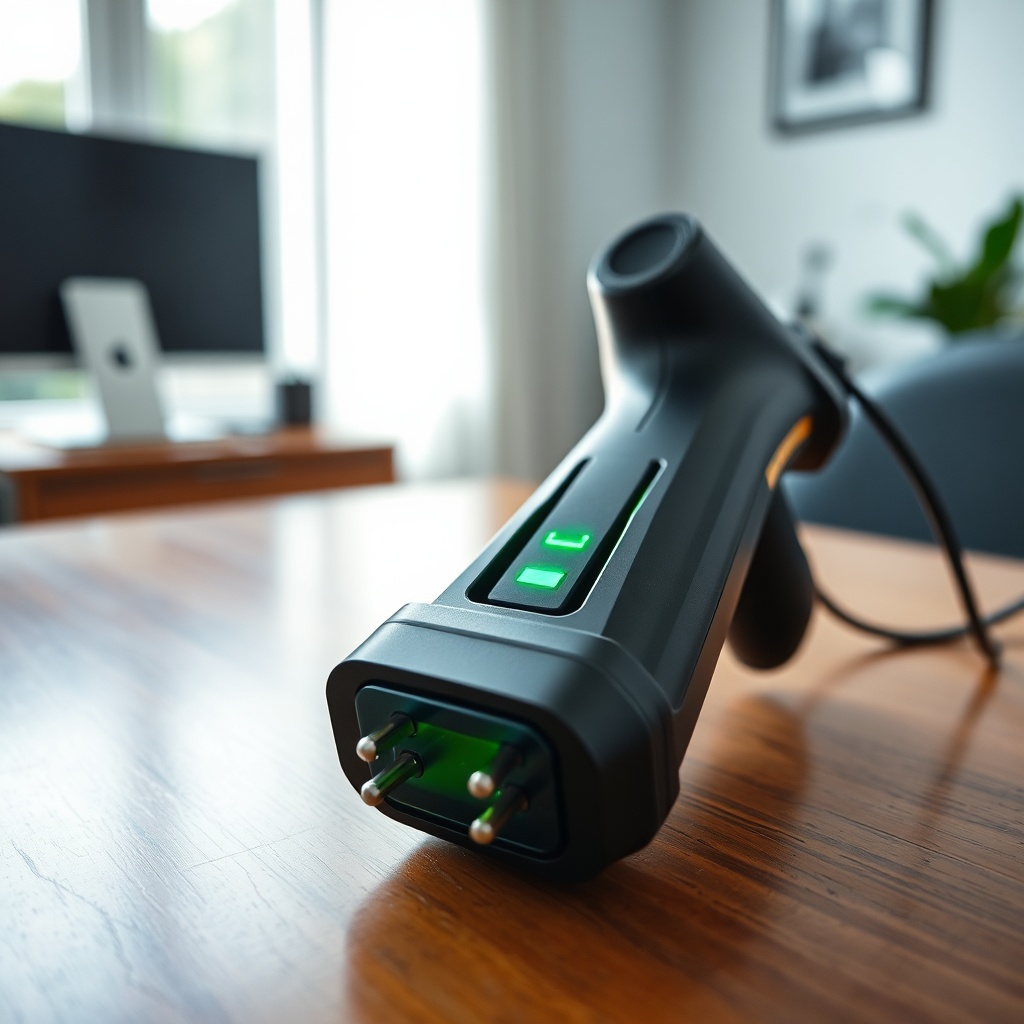
A modern rechargeable stun gun shown charging, emphasizing its battery technology and readiness.
Definition: A rechargeable stun gun is a self-defense device that delivers a high-voltage, low-amperage electrical shock to incapacitate an attacker, powered by an integrated battery that can be recharged rather than replaced.
The core mechanism is consistent across all stun guns: a battery powers a circuit that steps up voltage to a very high level—often in the tens of thousands of volts—while keeping the amperage (current) extremely low. This high-voltage, low-current charge is delivered through two metal electrodes at the front of the device. When these electrodes make contact with an attacker, the electrical current interferes with the body's neuromuscular system, causing involuntary muscle contractions and disorientation.
The fundamental difference between rechargeable and disposable battery models comes down to the power source.
- Cost over time: Rechargeable models have a higher upfront cost but lower long-term expense, as you are not continuously purchasing AA or CR123A batteries.
- Environmental impact: Rechargeable devices reduce the hazardous waste associated with discarded alkaline and lithium primary batteries.
- Convenience and readiness: You can plug the device into a wall outlet or USB port to top off the charge, whereas a disposable model requires you to keep a steady supply of fresh batteries on hand.
The technology has evolved significantly. Early rechargeable stun guns relied on nickel-metal hydride (NiMH) batteries, which were bulky and prone to self-discharge. Modern models predominantly use lithium-ion (Li-ion) cells, which offer higher energy density, lighter weight, and a much slower rate of charge loss when stored.
Battery Technology and Charging: The Heart of the Device
The battery is the most critical component of a rechargeable stun gun. It determines how long the device can operate, how quickly it can be recharged, and how long the unit will last before the battery degrades.
A close-up of a rechargeable stun gun in action, showcasing its electric shock feature and readiness for self-defense.
Lithium-Ion (Li-Ion) vs. Nickel-Metal Hydride (NiMH): A Comparison
Choosing between a Li-ion and NiMH stun gun often comes down to the trade-offs between size, weight, and longevity. Li-ion has become the industry standard for modern models due to its superior performance.
| Feature | Lithium-Ion (Li-Ion) | Nickel-Metal Hydride (NiMH) |
|---|---|---|
| Energy Density | Higher (more power in a smaller size) | Lower (bulkier for the same power) |
| Charge Cycles | Typically 300-500 cycles | Typically 500-1000 cycles |
| Self-Discharge Rate | Lower (holds charge longer when stored) | Higher (loses charge faster over time) |
| Memory Effect | None | Minimal to none (modern NiMH cells) |
| Charging Time | Generally faster | Generally slower |
| Weight | Lighter | Heavier |
Quick Answer: Lithium-ion (Li-ion) batteries are generally preferred in modern rechargeable stun guns because they are lighter, hold their charge longer in storage, and charge faster than older nickel-metal hydride (NiMH) batteries, though NiMH cells may offer a slightly longer overall cycle life.
The Realities of Charge Cycles and Long-Term Battery Health
A "charge cycle" is defined as using and then recharging a battery from 0% to 100%. A partial discharge and recharge, such as from 50% to 100%, counts as only half a cycle. Li-ion batteries degrade over time, and their capacity to hold a charge diminishes with each cycle.
To maximize battery lifespan, avoid letting the device drain completely before recharging. Partial charges are actually better for Li-ion cells than deep discharges. Heat is the primary enemy of battery health; storing a stun gun in a hot car or in direct sunlight can significantly accelerate degradation. Conversely, extreme cold can temporarily reduce battery output and capacity.
Understanding Charging Indicators and Ports
Most modern rechargeable stun guns use USB charging, with micro-USB and USB-C being the most common ports. USB-C is increasingly preferred for its faster charging speeds and reversible connector. Some older or budget models may use a proprietary AC adapter or a barrel plug.
Charging indicator lights (LEDs) are essential for knowing the device's status. Typically, a red light indicates the unit is charging, and a green light signals that it is fully charged. Some advanced models may have a multi-LED indicator that shows the approximate battery level. Always use the charging cable provided with the device or a high-quality, compatible replacement. Using an incompatible or low-quality charger can damage the battery or the device's internal circuitry.
How to Choose the Right Rechargeable Stun Gun: A Practical Decision-Making Guide
Selecting the right device requires more than just picking the one with the highest voltage. Your intended use case should drive your decision.
Matching the Device to Your Intended Use Case
- Everyday carry (EDC): Prioritize size, weight, and discreet carry options. A compact, lightweight model that fits easily in a pocket or purse is ideal. Look for a holster that allows for quick access.
- Home defense: Focus on power output, brightness of the built-in flashlight, and ease of access. A larger device with a brighter light can help identify a threat in the dark and disorient an intruder.
- Professional use (e.g., security personnel): Consider durability and reliability under stress. Look for rugged construction, a secure grip, and a model that can withstand rough handling.
Evaluating Key Specifications
- Voltage output: This measures the electrical potential. While a higher voltage is often marketed as better, it is not the sole determinant of effectiveness. The voltage must be high enough to penetrate clothing, but the current is what causes the neuromuscular disruption.
- Amperage (milliamps): This is the metric that actually determines effectiveness. A stun gun delivers a low-amperage current, typically in the range of 1 to 3 milliamps (mA), which is enough to cause pain and muscle contraction without being lethal. When comparing models, pay more attention to the stated amperage than the voltage.
- Build quality and materials: The device should feel solid and durable. Look for models made from high-impact ABS plastic or aluminum. The grip should be textured to ensure a firm hold, even in stressful situations or with sweaty hands.
- Additional features: A built-in LED flashlight is a common and useful addition. A safety switch is non-negotiable to prevent accidental discharge. Some models include a loud alarm, a holster, or a wrist strap for added security.
Comparing Popular Models: A Framework for Evaluation
When you are ready to compare specific models, use this step-by-step process to make an informed decision.
- Step 1: Define your primary use case and carry method.
- Step 2: Research the legal restrictions in your specific location.
- Step 3: Filter by battery type (Li-Ion is generally preferred for modern models).
- Step 4: Compare voltage and amperage specifications between shortlisted models.
- Step 5: Evaluate additional features that enhance safety or usability.
- Step 6: Read user reviews focusing on long-term battery performance and reliability.
Brand reputation and warranty support are also important factors. A reputable manufacturer will stand behind their product with a warranty, which can provide peace of mind that your investment is protected.
Safety, Legal, and Practical Considerations for Owners
Owning a rechargeable stun gun carries significant responsibility. Before purchasing, you must understand the legal landscape and commit to safe handling practices.
Navigating the Complex Legal Landscape
The legality of stun guns is not universal. In the United States, laws vary significantly from state to state. While many states allow ownership and concealed carry with a permit, others have strict restrictions or outright bans. For example, stun guns are prohibited in several states, including Hawaii, Massachusetts, Michigan, New Jersey, New York, and Rhode Island. Outside the U.S., many countries, including the United Kingdom, Canada, and most of the European Union, ban civilian possession of stun guns entirely.
It is your responsibility to research and understand the laws in your specific city, state, and country before purchasing. Even where ownership is legal, there may be restrictions on carrying them in specific locations such as airports, schools, government buildings, or other secured facilities.
Quick Answer: Stun gun legality is not universal. They are banned in several U.S. states like Hawaii, Massachusetts, and New York, and are generally prohibited in countries like the UK and Canada. Always check your local laws before purchasing or carrying one.
Safe Handling and Storage Practices
The safety switch is your primary defense against accidental discharge. Always keep the safety engaged when the device is not in use. Store the stun gun in a cool, dry place, out of reach of children and unauthorized individuals. A locked drawer or a dedicated holster can provide an extra layer of security.
Be mindful of how you carry the device. Avoid placing it in a pocket or bag alongside other metal objects like keys, coins, or loose change, as these can potentially bridge the electrodes and cause an accidental discharge.
Training and Effective Use
Owning a stun gun is not the same as being proficient with it. You must practice drawing the device from its holster, disengaging the safety, and aiming it at a target. The electrodes must make direct contact with the attacker's body for the device to be effective—it is not a projectile weapon.
Understanding the limitations of a stun gun is also crucial. It relies on physical contact, which means you must be within arm's reach of the threat. In a real-world confrontation, adrenaline and pain tolerance can affect how an individual responds to the shock. The device is a tool to create an opportunity to escape, not a guarantee of incapacitation.
Maintenance and Longevity: Getting the Most from Your Investment
Proper maintenance is the key to ensuring your rechargeable stun gun is ready when you need it. A device with a dead battery is nothing more than a heavy piece of plastic.
The Optimal Charging Routine
The "charge it once a month" rule is a good practice for maintaining battery health. Li-ion batteries slowly self-discharge, and letting them sit in a fully discharged state for extended periods can cause permanent damage. A monthly top-up charge keeps the battery in a healthy state and ensures the device is ready for use.
Modern Li-ion batteries do not suffer from the "memory effect" that affected older NiCd cells, so you do not need to fully discharge the battery before recharging. Avoid overcharging by unplugging the device once the indicator light signals a full charge. If the device has been in storage for six months or more, give it a full charge before relying on it.
Here is a step-by-step guide to the ideal charging routine:
- Step 1: Check the device's current charge level using the indicator light.
- Step 2: Connect the provided charging cable to the device and a power source.
- Step 3: Allow the device to charge fully until the indicator light signals a complete charge.
- Step 4: Disconnect the device from the charger.
- Step 5: Test the device's function (e.g., with the flashlight or a brief arc test) to ensure it's operational.
- Step 6: Store the device in a cool, dry place with the safety switch engaged.
Troubleshooting Common Issues
- The device won't charge: First, check the charging cable and power source. Try a different USB port or wall adapter. If the device still doesn't charge, the internal charging port or battery may be faulty.
- The charge doesn't last as long as it used to: This is the most common sign of battery degradation. Li-ion batteries naturally lose capacity over time and with repeated charge cycles. If the device no longer holds a charge for a reasonable period, it may be time to replace it.
- The device produces a weak spark: This usually indicates a low battery. Charge the device fully and test again. If the spark remains weak after a full charge, the internal components may be failing.
When and How to Dispose of the Device
Rechargeable stun guns contain lithium-ion batteries, which are classified as hazardous electronic waste. They should never be thrown in the regular trash. When the device reaches the end of its life, take it to a designated e-waste recycling facility or a retailer that accepts electronics for recycling. This ensures the battery is disposed of safely and the materials are recovered.
FAQ
How long does a rechargeable stun gun take to fully charge?
Charging time varies depending on the battery capacity and the charging method. Most modern models with USB-C charging can reach a full charge in 2 to 4 hours, while models with older micro-USB or proprietary chargers might take up to 8 hours.
How long does a full charge typically last?
In terms of active use, a full charge typically provides enough power for dozens of short bursts of electrical discharge. In terms of standby time, a fully charged Li-ion stun gun can hold its charge for several months, though it is recommended to top it off monthly to maintain battery health.
Can I leave my stun gun plugged in all the time?
It is not recommended to leave the device plugged in continuously. While modern devices have overcharge protection, constant charging can generate heat and stress the battery, potentially reducing its overall lifespan. Unplug the device once it is fully charged.
Are rechargeable stun guns legal to own?
The legality is highly dependent on your location. They are prohibited in several U.S. states and many countries. You must research and understand the laws in your specific jurisdiction before purchasing or carrying a stun gun.
What is the difference between voltage and amperage in a stun gun?
Voltage is the electrical pressure that allows the current to penetrate clothing, while amperage (current, measured in milliamps) is what disrupts the neuromuscular system. A stun gun needs high voltage to overcome clothing resistance, but it is the amperage that determines the effectiveness of the shock.
Conclusion
Rechargeable stun guns represent a significant advancement in personal protection devices, offering a superior balance of cost-effectiveness, readiness, and environmental responsibility compared to their disposable-battery counterparts. The shift to Li-ion technology has made these devices smaller, lighter, and more reliable than ever before.
The definitive answer is that a rechargeable stun gun is an effective self-defense tool—but only if it is the right tool for you. Your final recommendation should be to match the device to your specific needs and legal environment. A compact model is best for everyday carry, while a more powerful unit with a bright flashlight is better suited for home defense.
With ownership comes responsibility. You must commit to regular maintenance, understand the legal restrictions that apply to you, and practice using the device so you are prepared in a moment of crisis. Research your local laws, use the framework provided in this guide to evaluate your options, and make an informed decision that you are comfortable carrying and using.